


Industrial manufacturing relies heavily on small yet critical components that directly determine equipment stability, service life, and overall operational safety. Most buyers only focus on surface dimensions and unit prices when purchasing customized metal accessories, ignoring hidden quality defects that cause frequent failures, assembly mismatches, and unexpected downtime. These overlooked problems gradually lead to increased maintenance costs, delayed production schedules, and unnecessary economic losses across automotive, electronics, home appliance, and mechanical assembly industries. Choosing reliable custom precision metal stamping parts effectively eliminates most long-term operational risks and upgrades the overall reliability of finished mechanical products.
Many engineering teams underestimate how material hardness, edge smoothness, and dimensional tolerance control affect long-term equipment operation. Low-quality stamped parts tend to wear rapidly, deform under high pressure, or produce burrs that scratch matching components during continuous operation. Ordinary suppliers often cut corners on precision processing to reduce costs, resulting in inconsistent batch sizes that disrupt automated assembly lines. Cooperating with professional manufacturers like Dongguan precision hardware processing enterprise ensures full-process quality control from raw material screening to finished product inspection, matching strict industrial-grade tolerance standards for mass customized production.
Dimensional deviation remains the most frequent hidden trouble in bulk metal stamping procurement. Even tiny tolerance errors beyond standard ranges can cause tight fitting, loose connection, abnormal vibration, and premature part damage. Unlike simple mechanical cutting, precision stamping requires professional mold design, repeated mold calibration, and multi-point dimensional testing for every batch. Unqualified parts cannot be identified visually, and problems only emerge after installation and long-time operation, bringing unpredictable troubleshooting costs to downstream factories. Standardized precision stamping products maintain stable tolerance consistency across thousands of pieces, fully adapting to automated mass assembly and high-frequency working environments.
Material matching mistakes cause more stamping component failures than processing errors. Different application scenarios demand distinct stainless steel, carbon steel, copper, and alloy materials, each with unique corrosion resistance, pressure resistance, temperature resistance, and fatigue resistance properties. Many purchasers select materials blindly according to price, ignoring environmental factors such as humidity, vibration, oil corrosion, and high-temperature operation. Improper material selection leads to rust, fracture, fatigue damage, and shortened service life, forcing frequent part replacement and interrupting continuous production workflows. Professional customized stamping solutions provide targeted material suggestions based on actual working conditions to maximize component durability.
Batch stability issues plague countless hardware procurement projects. Small-scale sample products often meet quality requirements perfectly, but mass-produced goods suffer unstable thickness, uneven edges, and inconsistent surface treatment quality. Unregulated production processes lack unified mold maintenance and standardized inspection procedures, leading to huge quality differences between early and late batches. Assembly lines cannot adapt to fluctuating part specifications, resulting in low production efficiency and high reject rates. Mature precision stamping production systems adopt unified process standards, full-batch sampling inspection, and traceable production records to guarantee identical quality across all ordered quantities.
Key Performance Comparison Of Different Grade Metal Stamping Parts
| Performance Index | Ordinary Stamping Parts | High-Precision Industrial Stamping Parts | Long-Term Practical Impact |
|---|---|---|---|
| Dimensional Tolerance | ±0.05mm~±0.1mm | ±0.005mm~±0.02mm | High-precision parts avoid assembly jams and clearance failures |
| Surface Burr Condition | Obvious residual burrs | Smooth trimming, no sharp burrs | Prevent wear damage to mating parts and safety hazards |
| Batch Consistency | Large fluctuation between batches | Highly consistent size & appearance | Stable automated assembly efficiency, low rejection rate |
| Service Life Under Load | Short, easy fatigue deformation | Long anti-fatigue, pressure-resistant stable operation | Reduce frequent replacement and maintenance expenses |
| Corrosion & Wear Resistance | Poor, easy rust and aging | Excellent anti-rust and wear-resistant treatment | Suitable for harsh outdoor and humid industrial environments |
Surface treatment quality directly extends the practical service cycle of metal stamping accessories. Electroplating, passivation, oil sealing, and anti-rust coating processes directly resist oxidation, corrosion, and friction loss. Inferior surface treatment peels off easily after short use, exposing base metal to air and moisture and accelerating rust and aging. Professional precision stamping adopts multi-layer standardized surface treatment, adapting to indoor dry environments, outdoor humid environments, and oil-contacting mechanical environments without performance degradation.
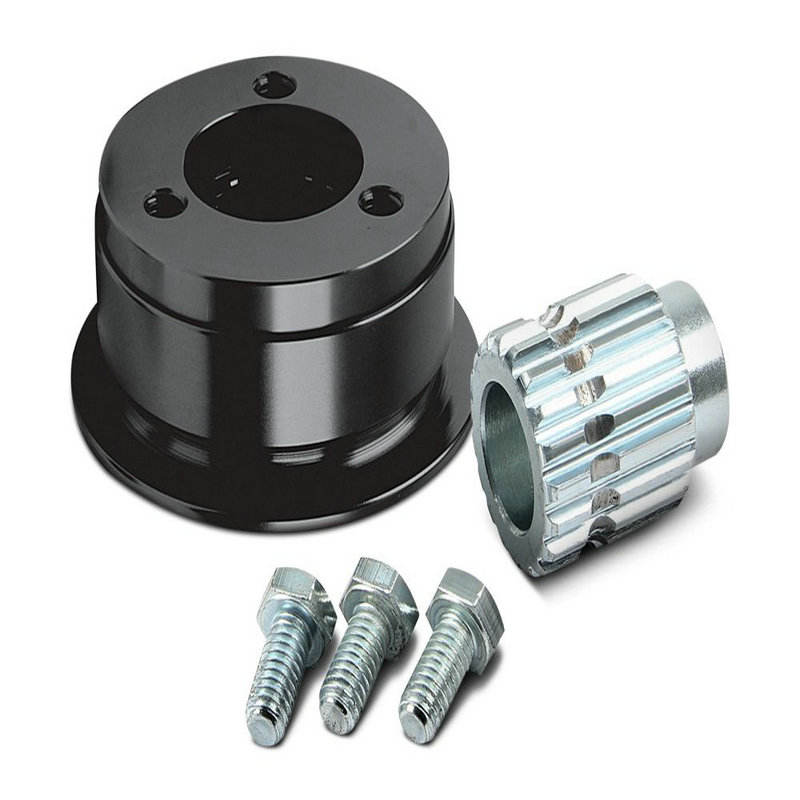
Assembly compatibility is another core demand easily ignored by buyers. Precision stamped parts must perfectly match bearings, shells, connectors, and circuit accessories. Poor matching precision increases assembly difficulty, raises labor costs, and causes loose connections during equipment operation. Optimized structural stamping design fits mainstream industrial assembly specifications, reduces manual adjustment work, and improves overall finished product assembly efficiency and structural firmness.
Cost-effectiveness should be evaluated from the full life cycle instead of unit purchase price. Cheap low-quality stamping parts save upfront expenses but bring frequent breakdowns, production halts, and secondary replacement costs. High-precision customized parts have reasonable unit prices, extremely low failure rates, and ultra-long service cycles, greatly reducing comprehensive operating costs for manufacturing enterprises. Long-term bulk procurement further optimizes overall industrial cost control and improves enterprise profit margins.
In summary, qualified precision metal stamping parts are not simple hardware accessories, but core supporting components that ensure stable operation of the entire industrial chain. Clarifying hidden quality risks, dimensional precision requirements, material adaptability, and batch stability helps purchasers avoid common procurement pitfalls. Choosing professionally processed, strictly inspected customized metal stamping products lays a solid, reliable foundation for stable production, high-efficiency assembly, and long-term safe operation of industrial equipment.